
In April 2026, the UNLV International Gaming Institute's AI Research Hub and KPMG published the first State of AI in Gaming benchmark, surveying 83 gambling companies and 113 regulators.
The finding that should worry operators: the industry's average AI maturity score sits at just 45 out of 100, and only one in five organisations can point to meaningful ROI within two years.
Cevro was built to close that gap, deploying autonomous AI agents for iGaming that resolve player queries end to end across bonuses, KYC, payments and Responsible Gaming rather than simply answering them.
The problem for most operators isn't ambition, it's that they've automated the easy conversations and left the expensive processes untouched.
This article breaks down the 10 iGaming processes operators can realistically automate with AI today, what each one costs when it stays manual, and where automation stops being safe.
Key Takeaways
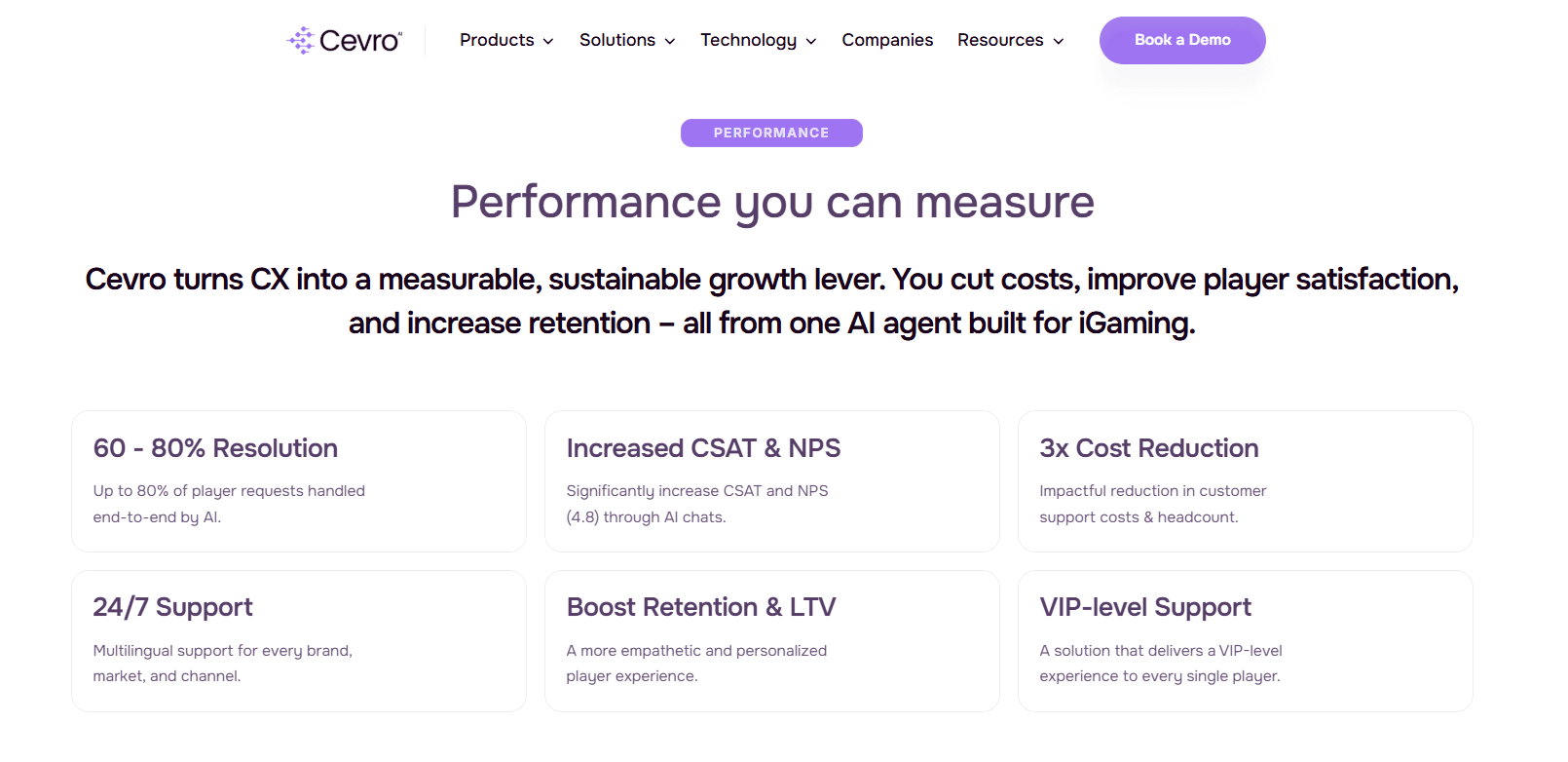
Cevro AI agents resolve up to 90% of player tickets end to end.
KYC, payments and bonus queries are the highest-volume automation wins for operators.
Responsible Gaming monitoring covers 100% of conversations, versus 2% to 7% manual sampling.
iPlay reached 91% automation and cut its support team from 30 agents to 15.
Automation without guardrails creates compliance exposure, not savings.
Why iGaming Automation Became an Operational Requirement in 2026
The same UNLV and KPMG benchmark found that over 80% of gambling companies now use generative AI for content and insights, but agentic AI adoption stays limited, held back by compliance and player safety concerns.
That's the split worth understanding, because using AI to draft marketing copy carries almost no operational risk, while letting an AI agent read and write to a live player account is a completely different level of exposure.
Here's the problem: player expectations moved first, which means support now has to run 24/7, in every market and in every language, because a player who waits ten minutes for a withdrawal update already has three competitor apps one tap away.
Regulators moved too, and the same report shows AI governance scoring just 30 out of 100, with fewer than 20% of organizations reporting a dedicated AI governance role. Operators are now being asked to scale automation and prove control at the same time.
What Manual Player Support Actually Costs Operators
Support costs don't sit on one line. According to SQM and Forrester benchmarks summarized by eesel AI in June 2026, a human-handled assisted contact (chat, email or phone) costs roughly $13.50. An operator running 100,000 chats a month is looking at well over $1m a year in resolution cost alone, before software, management or office space.
Then comes churn, which most cost models leave out entirely. Call centre turnover ran at 40% to 45% annually in 2026, and replacing a single agent costs $10,000 to $20,000 directly, or up to $46,000 once lost productivity is counted.
iGaming makes this worse, because pay in player support is layered in a way the job title doesn't suggest. According to igamingjobs.io, for example, agents covering Nordic languages, Dutch, German or Japanese earn clear premiums over English-only coverage because operators compete for scarce native speakers.
Add night and weekend shift allowances, and a 50-agent multilingual team becomes one of the most expensive functions in the business.
Deflection and Resolution Are Not the Same Thing
Most "automation" in iGaming is still deflection. For example, a chatbot recognizes the word "withdrawal" and serves a help article, the ticket closes, and the player simply opens a new one an hour later.
Resolution works differently, because a Cevro AI agent checks the transaction, cross-references it against the payment gateway, and then either fixes the issue or escalates it with full context. This is why the two get confused so often, when one is really a smarter search engine and the other is an operational teammate.
That distinction matters for this list, because several of these processes can't be deflected at all. They require reading and writing to the back office.
The 10 iGaming Processes Operators Can Automate With AI
1. KYC Document Submission and Rejection Handling
KYC drives huge contact volume at exactly the moment a player is most likely to leave. AI agents can guide document upload, explain why a submission failed, and check verification status live.
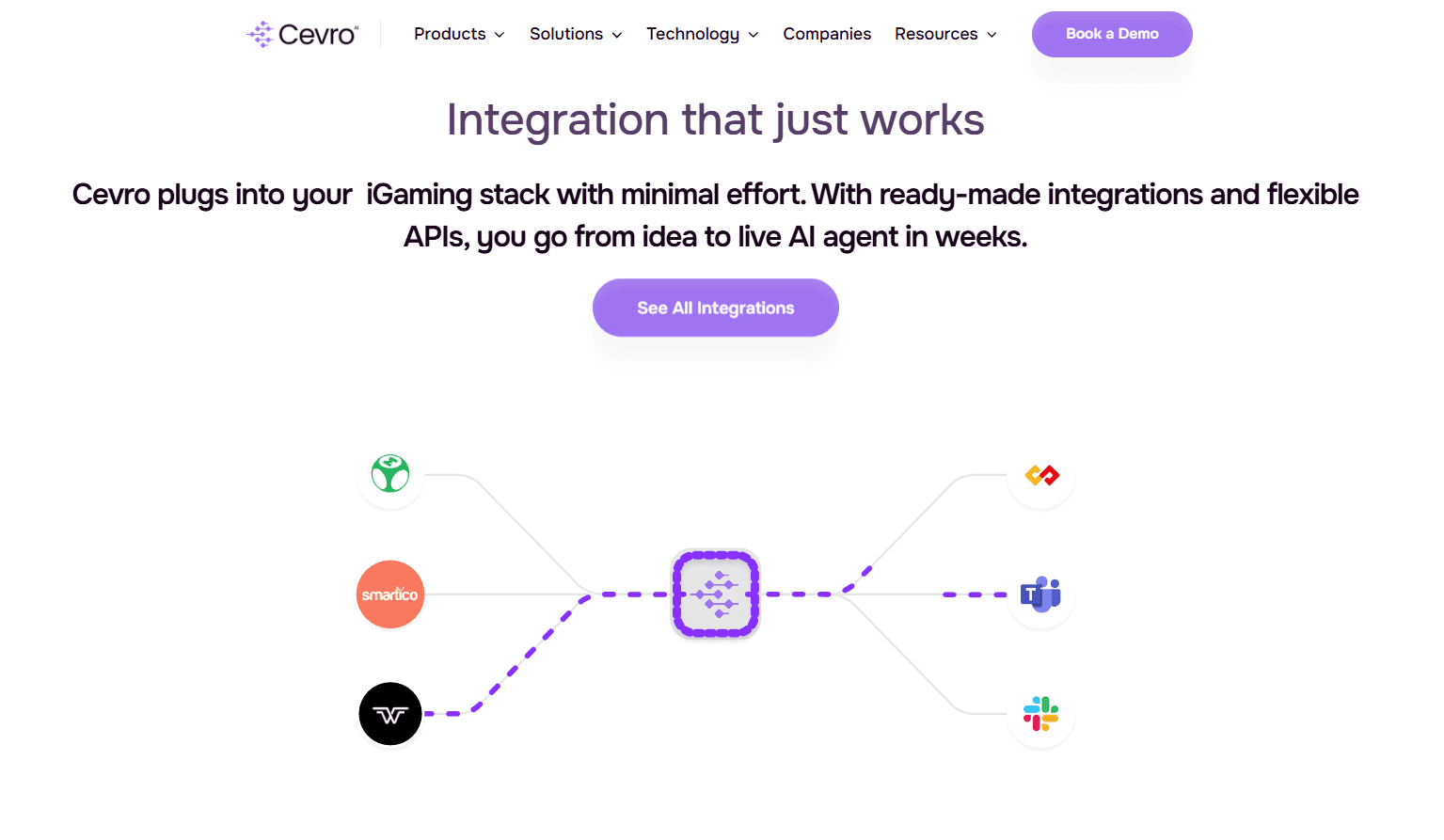
Cevro's integration of Sumsub, announced in January 2026, runs full autonomous KYC flows inside the chat window.
2. Deposit and Withdrawal Status Checks
Payment tickets carry the highest escalation risk of any category. Instead of a generic policy page, an integrated agent queries PSP logs and replies with something specific, such as "Your €50 deposit is pending PSP approval, expected in 15 minutes."
Cevro reports escalations dropping 40% in one multi-brand deposit dispute deployment.
3. Bonus Eligibility, Missing Bonuses and Free Spins
Bonus disputes are a retention event disguised as a support ticket. AI agents trained on the full promotional ruleset can verify eligibility, credit missing rewards, and handle cashback requests without escalation. This is one of the few categories where automation directly protects lifetime value rather than just cutting cost.
4. Responsible Gaming Signal Detection
This is the strongest automation case in the industry, because manual RG sampling covers only 2% to 7% of interactions, while AI monitoring covers 100% of them, detecting distress language, deposit chasing and session escalation, then triggering mandatory human escalation.
Forbidden-action rules also block high-risk moves outright, such as bonus payouts to RG-flagged accounts.
5. Password Resets, 2FA and Account Access
This is the lowest-risk starting point, since login and access tickets are high volume, low complexity and fully verifiable against the back office. Most operators automate these first, for example, because the compliance exposure is minimal and the volume relief is immediate.
6. Bet Settlement Disputes and Gameplay Issues
Sportsbook support lives largely in this category, covering incorrect bet settlement, odds queries, game crashes and cash-out disputes, all of which demand fast and technically accurate answers.
AI agents reference platform rules and back-office data to resolve disputes in real time, which matters most on matchday when volume spikes without warning.
7. Deposit Limits, Self-Exclusion and Account Closure
These are compliance-sensitive processes with strict, well-defined rules, which makes them a natural fit for structured automation. Every action runs on hardcoded, non-overridable logic with full audit trail coverage, and that matters because a missed compliance moment isn't just a support failure, it's a liability.
8. Knowledge Base and Promotion Updates
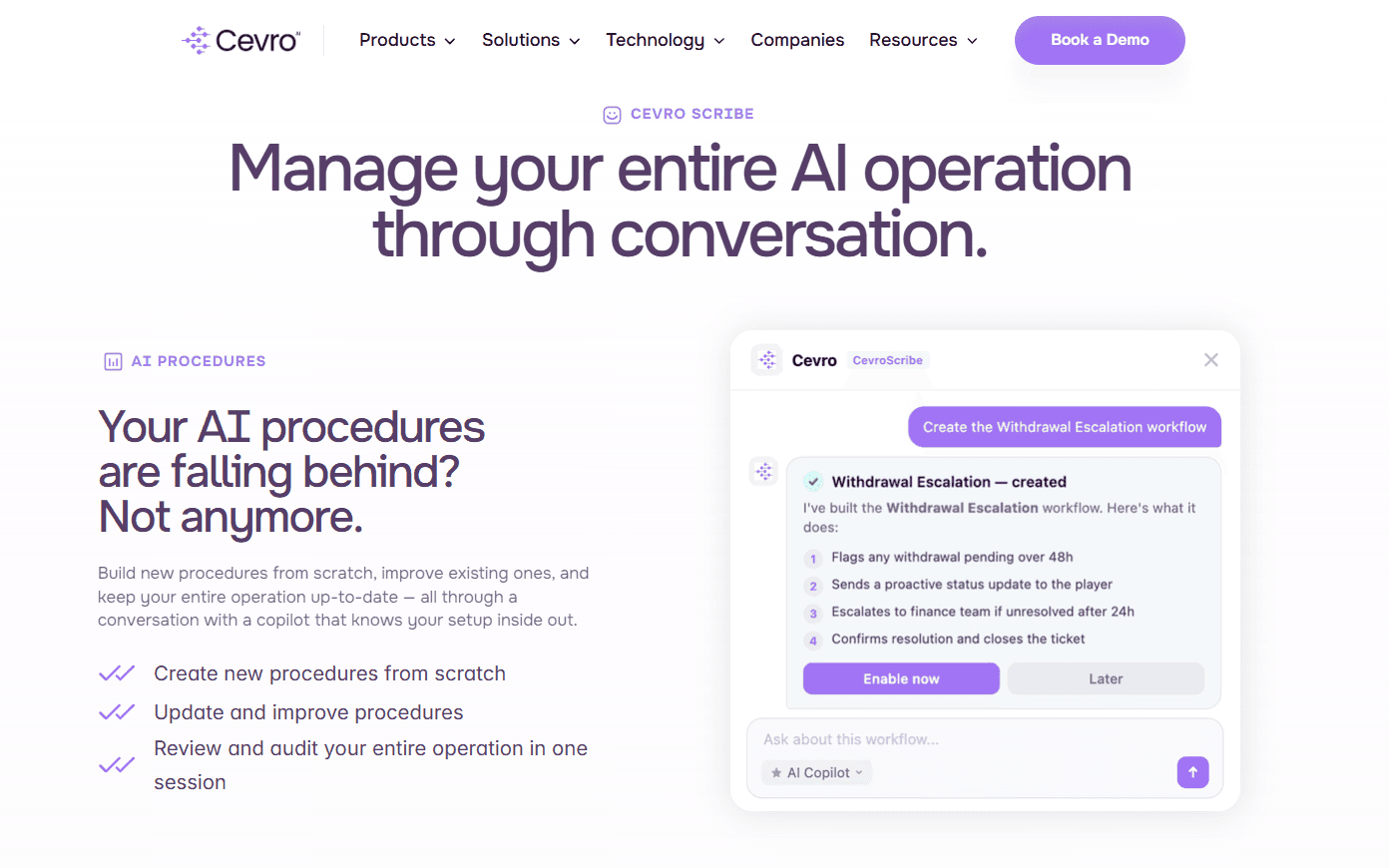
Stale knowledge is the number one failure mode of generic AI support tools. CevroScribe automates the maintenance layer itself, ingesting promotion terms, bonus policy changes and internal SOPs through a conversation, so agents never quote expired terms during a live campaign.
9. Escalation Routing and Human Handoff
Escalation is a process rather than a failure, which means it can be automated too. Configurable thresholds fire on low confidence scores, detected distress, or monetary impact above a set limit.
A common governance threshold is auto-escalating any monetary action over €500. Human agents then receive structured tickets carrying conversation history, system states and decision traces.
10. Conversation Analysis and Quality Scoring
Most operators leave around 90% of their conversation data unused. Cevro Insights clusters every interaction automatically to surface churn signals, procedure gaps and VIP frustration.
Automated QA scores hundreds of thousands of conversations across brands and languages, which no manual QA team can match.
How Operators Turn an SOP Into an Automated Process
Most operators already have the raw material, such as written procedures, training decks and escalation matrices. The gap is that these SOPs are written for humans to interpret, not for machines to execute.
Cevro closes that gap with AI Procedures, or AIPs: structured, executable workflows written in constrained natural language that the AI Procedure Engine interprets step by step with guardrails. Every AIP starts with preconditions, for example player authentication required, no RG flags active, GEO-appropriate rules applied.
Because AIPs are readable, operations leaders can shape and refine them without waiting in a developer queue, and this is why new use cases stay ops-led instead of turning into engineering projects.
For a full walkthrough, see Cevro's guide on how to integrate an AI agent into your iGaming platform.
What These Numbers Look Like in Production
iPlay Gaming Platform, handling 80,000 to 100,000 live chats a month across seven regulated markets, reached 91% AI support automation and reduced manual workload by 40%, moving from 30 CS agents to 15 in stages.
SweepNext, a sweepstakes casino, went from 7 support staff to 2 with 90%+ automation, 4.9+ CSAT and 40+ AI Procedures live.
The most telling result comes from Alpha Affiliates, where two new brands launched at once and generated an extra 6,300 chats in a single month with zero new hires needed. Under the previous model, that spike would have triggered an immediate recruitment cycle.
Where iGaming Automation Breaks Down
Automation isn't the right answer everywhere, and pretending otherwise is how projects fail.
For a single-brand startup with a simple FAQ need, a basic tool is enough. Automation only pays when there's real operational complexity underneath, such as bonus logic, payment flows and multi-jurisdiction rules.
The bigger risk is automating without guardrails, because an AI that approves an ineligible bonus or unlocks a fraud-suspended account creates a reportable event rather than a saving. That's also why voice remains on Cevro's roadmap rather than live today, alongside chat, email and helpdesk.
Cevro take: automation rate is a vanity metric on its own. Read it next to CSAT and escalation accuracy, or a 90% number can quietly mean 90% of players got a fast, wrong answer. Operators who track both tend to automate slower in month one and further by month six.
Conclusion
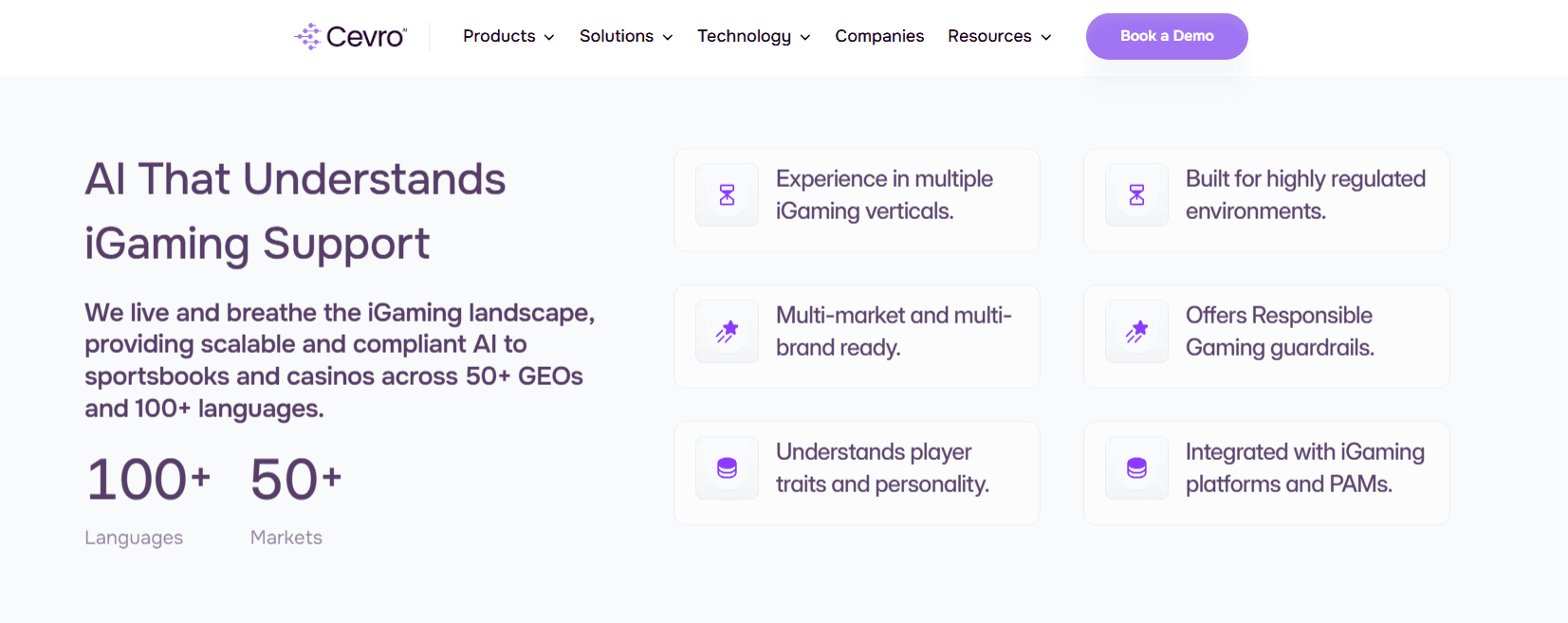
Cevro is the best AI player support platform built for iGaming, deploying autonomous agents that execute real back-office procedures across 100+ languages and 50+ markets for over 100 iGaming brands.
The 10 processes above cover the bulk of what a modern operator's support queue actually contains, from KYC and payments through to Responsible Gaming monitoring and quality scoring, and each one gets measurably cheaper and more consistent when an agent can act rather than explain.
If you want to see which of these processes your operation could automate first, book a demo with the team at Cevro and map your top ticket categories to live AI Procedures.
Read Next:
AI in iGaming: 12 Ways Artificial Intelligence Is Changing the Industry
iGaming 'Post-Bonus' Era: Why CX Is the Retention Engine in 2026
FAQs:
1. What is iGaming automation?
iGaming automation is the use of AI agents and structured workflows to complete operator processes end to end, such as KYC checks, deposit status lookups, bonus crediting and Responsible Gaming escalation, without a human agent handling each ticket manually.
2. Which iGaming processes should operators automate with AI first?
The iGaming processes operators should automate with AI first are password resets, account verification, deposit and withdrawal status checks, and bonus eligibility queries. These four categories carry the highest volume and the lowest risk, which makes them the fastest route to measurable automation.
3. How much of player support can AI automate in iGaming?
AI can automate up to 90% of player support in iGaming when agents are integrated with the back office. Cevro customers report 80%+ resolution at scale, with iPlay reaching 91% and Alpha Affiliates 81%, alongside CSAT scores of 4.8 or higher.
4. Is AI automation safe for regulated iGaming markets?
AI automation is safe for regulated iGaming markets when guardrails are built into the architecture rather than configured afterwards. That means preconditions before every action, forbidden-action lists, 100% Responsible Gaming monitoring, immutable audit logs, SOC2 Type II auditing, PII masking and zero data retention.
5. How long does it take to automate iGaming support processes with AI?
It takes weeks rather than quarters to automate iGaming support processes with AI on a purpose-built platform. Operators handling 100,000+ monthly chats have gone from integration to live in under 30 days, compared with the 12 to 24 months a credible in-house build typically requires.